The newsletter
Practical AI knowledge for people building products
Written by Rich Holmes and read by 55,000+ product managers, UXers, engineers and tech leaders at companies including Stripe, Spotify, Netflix and Meta. It sifts the noise so you stay on top of what is happening in AI without feeling buried by it.
- Explainers and AI tutorials that plug the gaps in your technical knowledge
- Data, trends and new AI technologies, tracked as they land
- In-depth analysis of what leading product companies are building
- Practical tools and templates you can use the same week

🔵 What people are building with Claude Fable 5 so far
Plus: Apple's new design principles, Self-improving products and Lovable's new study reveals what we're vibe coding
Rich Holmes · Jun 12, 2026
Hi product people 👋,
This week, Fable 5 arrived as a safety-tuned version of the powerful Claude Mythos model. We'll take a look at what people are building with it so far.
Plus, while Apple's WWDC was a pretty low key affair this year, the company's talks on product design are always worth a look. And are self-improving products really the future of product development? Amplitude is giving the idea a shot with its latest release.
Have a great weekend!
Rich
Watch on YouTube · Follow on Substack Notes
Key reads and resources for product teams
New Agentic payment and features explored for product teams
AI agents are becoming an economic force on the internet, but the payment infrastructure they need looks nothing like the checkout pages built for humans. This deep dive breaks down the 5 layers of agentic payments emerging in 2026. (Department of Product)
Unexpected lessons from an AI-assisted prototype experiment
Adobe's Veronica Peitong Chen shares surprising lessons from an eight-day experiment using AI-assisted prototyping on the Firefly team. (Adobe)
Are Lean Startup principles still relevant? An AMA with Eric Ries
Eric Ries, author of The Lean Startup, is back with Incorruptible, exploring why good companies drift from their missions through "financial gravity".
Why you need a point of view in the Age of AI
AI has flooded the market with information, but buyers want something simpler: your honest take on the future. (Substack)
Design systems are over. Product context is now the work.
Robin Cannon argues the real work isn't building component libraries anymore; it's codifying product context that AI needs to maintain coherence at scale. (Substack)
How Anthropic build self-service data analytics with Claude
Anthropic's data team automates 95% of analytics queries with Claude. This post reveals how they structured their system to avoid three critical failure modes. (Anthropic)
Updates from Apple's WWDC
This week, Apple held its annual WWDC and the big announcement was the revamped version of Siri which now comes with a dedicated mobile app and the ability to swap models. There were no major updates to iOS, with Apple taking the opportunity to ship some refinements including the ability to configure the transparency settings on Liquid Glass.
In this talk, Apple's design evangelists Linda and Doug reveal what great design actually means. They break down seven core principles for building products people truly love.
How to apply Apple's design principles to your own product →New product features and innovation this week
After months of hype around Claude's new Mythos model, Anthropic released a safer version called Fable. Fable 5 uses an AI-based classifier that detects risky requests in three areas — cybersecurity, biology/chemistry, and model distillation — and automatically routes those queries to Claude Opus 4.8 instead.
For product teams, this matters because the fallback architecture lets you deploy frontier capabilities safely — the classifier acts as a safety valve rather than a hard block.
How people are using Claude's new Fable model
Tech debt and code migration — Anthropic says Fable 5 compressed months of engineering work into days for Stripe's codebase migration. In a 50-million-line Ruby codebase, the model performed a migration in a single day.
Building games — a Minecraft roller coaster game was built in a single shot. If making games becomes easier, could we see more consumer products include them as features?
Video editing — Anthropic's own tech lead used Fable 5 to edit his own video, using "a lot of code and tool calls, transcription services, Figma and others."
Landing pages — a hyper-polished landing page for a SaaS company with liquid glass style components.
📈 Product data and trends
Lovable has published its first ever Build Economy report which shares who is building software and what they're building. 80% of Lovable builders are non-technical, with product managers in third place — above designers who come in at number 8.
Who is building on Lovable?
Source: Lovable Build Economy Report 2026
Men account for 82% of all users. 60.5% of builders haven't made any money from their products. The US accounts for 25% of activity, followed by Brazil, the UK, the Netherlands, and Germany.
New research from Atlassian shows 94% of knowledge workers use AI regularly, but disclosing that fact costs them professionally. Colleagues rated peers who admitted to using AI as 10 times lazier — even when evaluating identical work.
AI use cases: emotion-related activities on the rise
Source: HBR AI in the Wild Report 2026 (n=12,637 use cases)
In just two years, Google searches ending without a click have jumped from 60% to 68%. Paid clicks are growing but organic clicks to the open web collapsed by 9.5 points.
Google searches ending without a click
Source: SparkToro / Datos 2026
Paid subscribers get the full DoP Substack including: The Knowledge Series for sharpening your tech / AI skills, the AI Prompt and Skills library and DoP Deep dive reports.
Discussion about this post
More from Department of Product
Context Engineering for AI Agents Explained
Agentic Workflows Explained — an in-depth guide for Product Teams
DESIGN.md Explained — The Format Reshaping How AI Builds UI
Recent editions
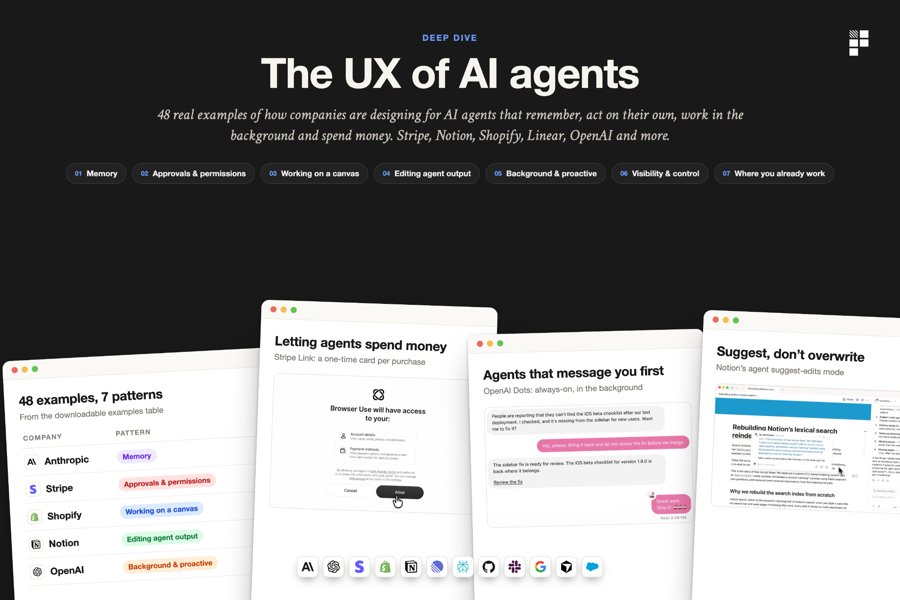
The new UX of AI Agents
Memory you can edit, approvals people read, and agents that work while you’re away. 48 real world examples from 26 companies.
Oct 6, 2026
OpenAI Dots and the rise of Ambient Agents
Plus: the “one true SaaS layout”, Google Stitch gets a CLI, Replit interactive charts and more.
Oct 4, 2026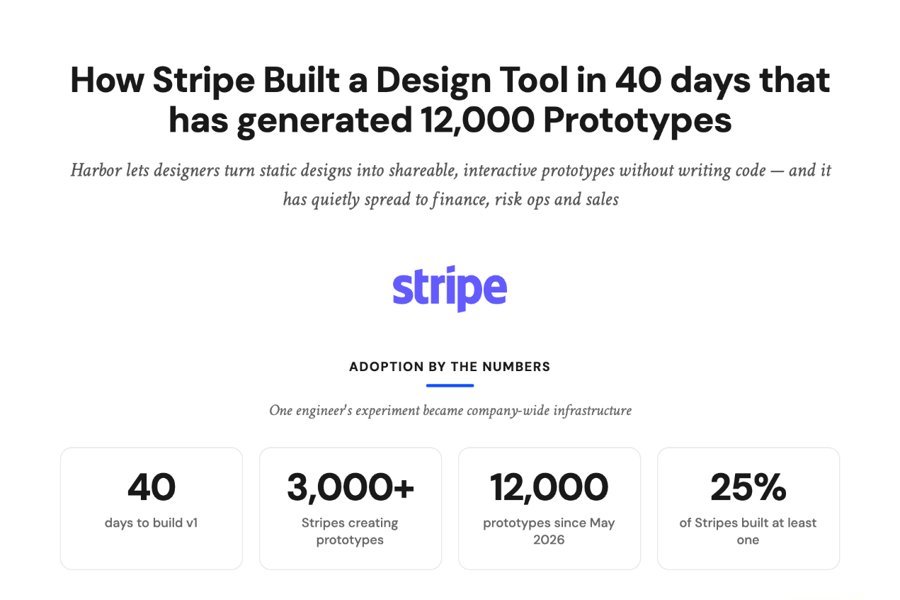
How Stripe built an internal prototyping tool that’s created 12,000 prototypes so far
And how you can build your own. Plus, other examples of new design tools and technologies.
Sep 28, 2026
Meta’s Muse comes to your keyring, but Amazon isn’t happy
Plus: Figma’s CEO says UIs won’t disappear, YouTube and Spotify ship algorithmic controls, and more.
Sep 27, 2026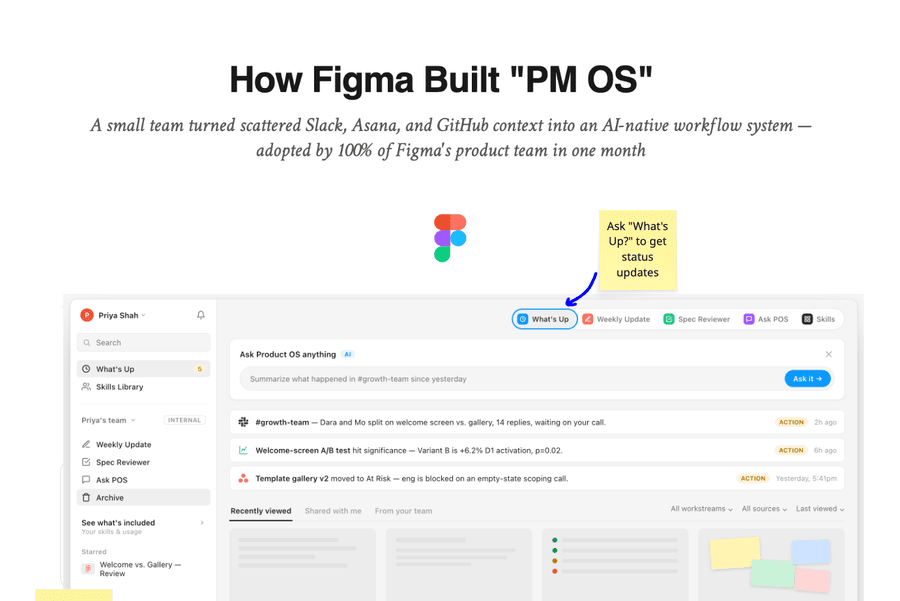
How Figma Built a Product OS that saved PMs 2 hours a day
And how you can build your own version. Plus 15+ examples of internal AI tools from Pinterest, Airbnb and more.
Jul 13, 2026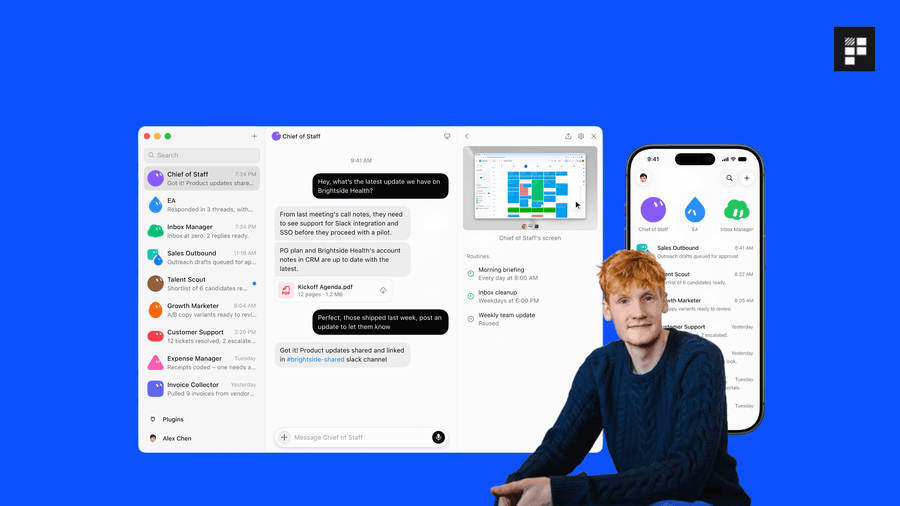
Cursor’s new team mate and Gemini’s 1 billion milestone
Plus: YouTube’s CEO unveils his AI strategy, and how Ramp built product integrations that write themselves.
Aug 16, 2026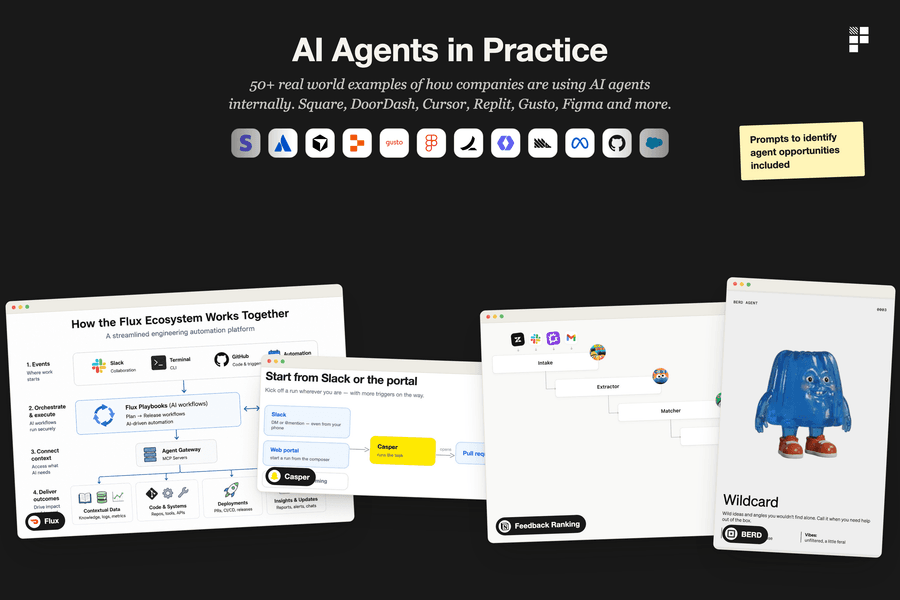
AI Agents in Practice
50+ real world examples of how companies are using AI agents internally. Square, DoorDash, Cursor, Replit, Gusto and Figma.
Sep 1, 2026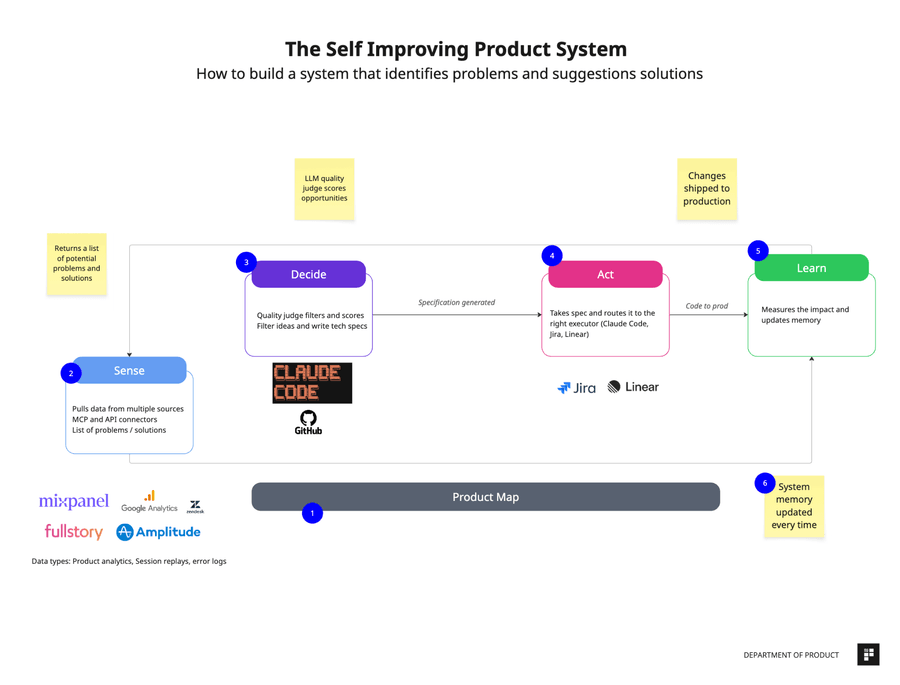
How to build a Self-improving Product
Is this the future of product development? Real world examples with templates and guides to follow.
Jun 22, 2026Read by teams at
















Penelope Lawrence
Jun 15
the build is the easy part. what i'd actually want to know is how many of these things are still standing 90 days later, when the confident wrong answer becomes somebody's problem to catch.